
In the 90’s I worked with two counterpart churches in the UK. (Names changed for this article.) Over a decade St Jude’s struggled, withered and was shut down, being first annexed to a neighboring church. The Church of Good Hope, by contrast, thrived and multiplied ultimately by around 6,000% What was the difference between them?
- St Jude’s comprised around sixty mainly septuagenarians when I took on the pastorate.
- The Church of Good Hope, when I joined as a pastor, comprised around twelve septuagenarians and octagenarians – and one nonagenarian!
On the face of it The Church of Good Hope appeared the weaker of the two congregations: smaller and older. Both churches were running programs that evidently held no interest to the wider community. Neither church knew how to fix the problem.
So what was the difference that allowed one to thrive while the other one withered? In part the key lay in the questions each community asked. In its critical season St Jude’s asked itself the wrong questions! These “wrong questions” are best illustrated by the bankruptcy story of Kodak.

In 2012 one of the world’s most iconic brands filed for bankruptcy. Years before, this would have seemed impossible Kodak had led the world in film for decades. Its tagline about capturing a “Kodak moment” had become a household phrase. So what went wrong? Was it the arrival of digital cameras – as everybody believes? Not really.
In fact, Kodak could have led the world with digital photography just as it had done with film, because it was Kodak’s R&D team that produced the world’s first filmless camera. Kodak recognised this seismic shift in photo technology and in that moment the executives made a critical error. Understanding that that filmless cameras would ultimately irrelevance their exisiting products, they buried the new technology. It was a suidicidal decision.
In that moment they could have asked a core question, a mission-based question:
“How can we lead the way in helping people capture their Kodak moments?”
Instead the company’s executives asked a fear-based question:
“In the light of digital photography how can we keep people buying our film?”
The answer to the fear-based question was to bury the new technology and gag the R&D department. This was the decision that took them up a dead end alley and ultimately bankrupted them. If only Kodak had remembered that their core purpose was to enable people to capture life’s “Kodak moments” they would have realised that the new technology could be their vehicle to new levels of success rather than to oblivion.

Capturing a “Kodak moment” with an iPhone
Many churches today find themselves in a similarly critical season. They can feel that the wind of the Spirit is blowing away from their current structures and programs. In the West, increasing numbers of people “Just don’t want to do church that way anymore.” Believing people, motivated by God and Christianity,appear to be finding less and less relevance in what the churches are currently providing. Faced with this seismic kind of shift, what questions will the churches ask?
Will they ask a core question, such as:
“How do we provide value and engage with the ways in which people today are finding and engaging with God?”
Or will they ask the fear-based question viz:
“How can we get the public to populate what we’re already doing?”
For St.Jude’s it was the fear-based question that set the agenda. Consequently, any new activity or program that did not deliver same kind of people as themselves – into the programs already on offer was unwelcome and found itself opposed – even if the program itself was attracting and keeping new people. This self-sabotaging mentality did not arise because the stakeholders were bad people. They were just terrified that their established patterns might not survive alongside the more thriving, newer programs. Despite my best efforts in that parish, I was unable to build the people’s confidence to imagine a better future and to ask better, bolder questions.
To be fair the people’s anxiety around closure was not unfounded. Coterminous with my arrival, diocesan processes had sparked a rumour that the church had been earmarked for closure. A diocesan mission audit had determined that the church’s level of attendance only merited half a priest – despite the fact that they had just hired me. The publication of that information naturally made the people feel that the writing was on the wall for the church’s closure and, inspite of my efforts to build the church up with programs that attracted new people, many of the older members believed that I must have been put in with secret instructions from the diocese to the church down.
I was careful to maintain the church’s existing programs intact and invested myself in them wholeheartedly. Without taking anything away from the inherited patterns I added Christian basics courses to the Baptismal and Confirmation preparation, a more contermporay song at the end of the administration of communion, an Alpha Course on the Sunday evenings in the church hall, Christmas and Easter services in the social rooms of the high rise blocks of flats, and a course in healing prayer for the already existing healing prayer-group. The result of these initatives over twelve months was thirty new people from the projects (local government housing) being added to the pre-existing congregation of sixty.
What could have been good news, growth to move us out of the audit’s danger zone, was not embraced by the established older members. Their background anxiety concerning survival prevented them from engaging hopefully with new activity and with the new people. So much so, that I remember one church warden standing at the doorway of the church and telling a single mother who wanted to attend the Sunday morning service with her toddler “You are exactly the sort of person we don’t want in this church.” Another church concillor said emphatically, “I just don’t think people should bring children to church. It’s too distracting.”
The (not unwarranted) fear of closure on account of the disocesan audit, pushed the attention of the established and declining older congregation into the mind-set the self-sabotaging, Kodak question about survival. The new, even if it was successful, was seen as the enemy of the old – an approach which achieved for that church the exact same result it did for Kodak. And shortly after my unsuccessful tenure ST Jude’s was annexed, and ultimately shut down.

A few blocks away in the very same city the hardy remnant of The Church of Good Hope were also at their wits’ end. However, over a period of two years the faithful work of an Intentional Interim Minister patiently built up the morale and confidence of that small crowd. For two years he ministered to the church’s emotional life, filling their minds with stories of reinvention, re-launching and community resurrection. Coaxingly and skilfully he primed the people to ask themselves a different kind of question, a core question, a missional question:
What is GOD doing in our community and how can we be a part of that?”
This was a better question – a question of life and not of fear.
As it happened, God was stirring in the hearts of bored and disengaged children in the projects (government housing) in the area. They were desperate for community, fun and responsible adult attention. In response, The Church of Good Hope conceived of Kids’ Hope – a christian-based club for the local kids. It was a turbo-charged, Bible-based Sunday school held in a community hall on a Saturday morning. When the elderly twelve saw that God’s blessing was on this new endeavour, attracting significant numbers from the get-go, they generously and enthusiastically threw themselves behind it.
They moved their meeting place, reinvested their real estate equity and transformed their whole schedule of meetings to orientate – geographically, economically and thematically – rebranding the whole church around this new kids’ work. In factit was then that it took on its new name, The Church of Good Hope! And the church took off!
The Church of Good Hope not only survived, it exploded into new growth. Today The Church of Good Hope has dramatically outgrown its former premises. In fact it now meets in the previously disused building of St Jude’s.
If this seems too neat and poetic a narrative, let me assure you, this is a true story! Only the names have been changed.
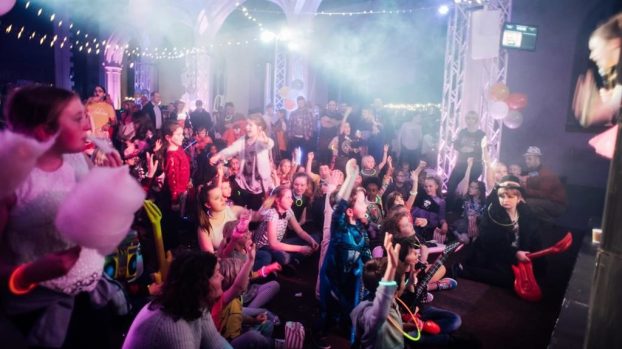
This tale of two churches illustrates the struggle of many churches today. Many churches in the West sense that the wind is blowing away from inherited programs. But where’s it blowing people to? What are the people doing? Where are people going? What are people looking for? And how can the church’s investment the Kingdom of God meet people in those pursuits?
Kodak’s true core purpose was to help people capture their lives’ Kodak moments. What then is the Church’s core purpose? With a clear answer to that question, communities of faith find the courage and the ability to embrace the degrees of adhocracy and experiment that are essential to adapting and thriving in the conditions of a new missional era.
Which question is shaping your decision-making and patterns of recruiting:
The Kodak question, or the Church of Good Hope question?
Which question will you choose?
 Paul Anthony Wallis