JESUS GENERATION’S EXEMPLARS

After a period of tremendous church growth in three contiguous church-plants in Portsmouth, UK, I was dissatisfied. While thrilled with the numerical growth we had enjoyed over my five years in situ, I wanted to know how we could go deeper with God and in the transformation of our lives. My question to the universe was, “How could I lead people at a deeper level into a transformed life?”
With the members of my group-household, I found answers to these questions from those who had gone before us, fellow-pilgrims in the the great cloud of witnesses. We drew principles and practices from Celtic Apostles like Aidan, Fursa, and Columba; from the first Benedictines, Francis, Clare and the first Mendicants; Wesley, Whitfield and the first Methodists; William Booth and the first Salvationists. Later the story of Francis and Edith Schaeffer also became significant to us.

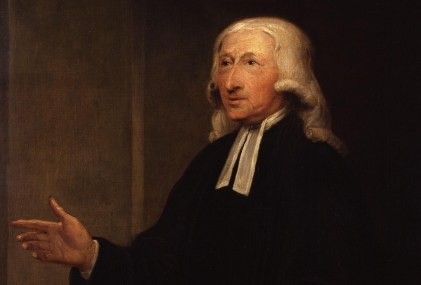
JGen began as a network when a dream inspired my to invite boarders and alumni of my group houses to share my own rule of life. This is a well-worn route into community life among pastors. I had seen it modelled and learned from Presbyterian Pastor Francis Schaeffer, Anglican Priests David Watson and Bishop David Shepherd, and Baptist Pastor, Noel Stanton.
The rule of life into which I invited my boarders and alumni was one rooted in the promises made by Anglican clergy at ordination, and the Articles of War of the Salvation Army, my spiritual heritage on my paternal grandmother’s side. This invitation marked the start-up of JGen proper in 1997.
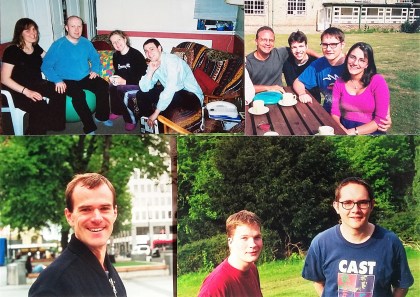
JGen Members and Associates – UK & NZ – 1997-2003
Beyond the ambit of my initial household, growth came as readers of the JGen vision began petitioning me for a way they could participate in our rule of life, but in their own local church and life-setting. At first I ignored these requests, as I was entirely focused on beginning a gathered expression. However, the moment I set out to create a gathered expression my “divine supply” immediately dried up. This synchronicity turned out to be a mercy, because if I had moved forward with a gathered expression at that time, I how realise that I would have merely reinvented a celebration + cell church – a model already being amply provided by others.
Meanwhile, requests from non-local enthusiasts continued and eventually I felt compelled to respond. Guided by what Francis of Assisi had done in the 1200s, I allowed JGen to develop its own “secular order / associate structure”. So, in the beginning, the joke was that JGen had a “third order” before we had a first or second! It turned out that allowing JGen Associates to form was the key that unlocked the vision and caused the life of JGen to mushroom.
Only in our seventh year as a network of Associates did our network of gathered expressions begin to emerge. Once again this happened in response to requests. This time the request came from JGen Associates in the UK and Australia. In this way, our journey and growth was not the result of pre-meditation and design. It was essentially organic, a shared exercise of following our noses.
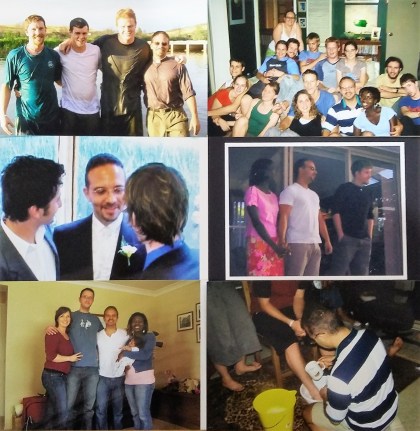
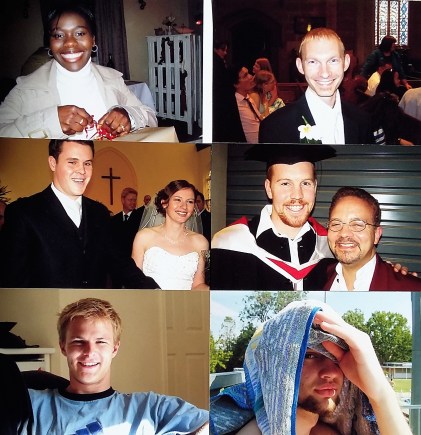
Some snapshots of JGen Australia 2003-2009
ORTHOPRAXIS
One of the paradigm shifts that we and others wrestled with at that time was a shift:
- From centering community on doctrine – The Way of Orthodoxy
- To centering a community on a rule of life – The Way of Orthopraxis.
Accordingly JGen never published a doctrinal basis. If you were to read The Call document and The Travellers’ Guide you wcould certainly pick up out what our guiding beliefs might be. But our intention was focused less on matters of doctrine and more on how we lived out the apostolic life that Jesus modelled, and then entrusted to the 12, the 72, and all those of us who have followed since. We summarized this appraoch in our Values and Pledge. The Call Document expressed our values like this:
Our beliefs and guiding values are rooted in the revelation of God through Jesus Christ. Through is words and work – as expressed in the Apostles teaching – we understand God progressively revealing his nature, character and will through the Bible. In response to this grace we want to know and enjoy God in every aspect of our lives – family, social, personal, leisure and work – keeping a balance of those things and expressing our love for him in…
- Reading the Bible in order to know, practice and spread the teaching of Jesus and his Apostles
- A life birthed and led by the Holy Spirit, equipped for service by the power and gifts of God
- A moral integrity and purity of heart that directs our inner life, our use of money, our dealings with people and business, and our active engagement with the social and political structures of our local communities
- Rooting ourselves in the love and shared life of a community of believers
- Nurturing habits of prayer and praise, both in company and in solitude
What JGen’s values and pledge did not do was call members to persuade people to become Christians or to join our group. We certainly wanted to promote Jesus and “win others to Him.” But rather than focus on growing our membership our aim was to emulate the elements of the Apostolic Mission, which so gripped our exemplars. T
We identified that mission in the language of Luke 10 and Matthew 10, and boiled it down into four kinds of activity:
- Gregariously getting to know and bless those around us
- Eating and drinking with any people of peace who would accept our friendship and share in oue hospitality
- Serving people’s needs
- Sharing our own experience of the power of God’s love to transform our lives
JESUS GENERATION’S WIDER FAMILY
Most congregations operate with the core mission to grow their own numbers. Because we had all come from that background, we had to work hard to deprogram ourselves from that mindset and embed a new mentality. This was not always easy. The key to that shift was to understand ourselves as an intentional community within the wider tradition of monastic Christianity. It is in this regard that I must acknowledge the importance of a key figure who enabled me (and by extension our network) to make that shift. My helper was the late Revd Edward Leslie Dudding aka Father Gregory, superior of the Anglican order, The Community of the Servants of the Will of God.
CSWG is a community rich in Benedictine and Eastern Orthodox heritage. For 16 years CSWG was a spiritual home-base for me, Through those years I enjoyed the incredible and generous gift of Father Gregory’s patient and profound mentoring. More than anyone, Father Gregory helped me to understand what JGen really was. More than anyone, he helped us in JGen:
- To perceive our deep goal of conversion of life
- To embrace our call as a secular order
- To formalise a “Rule of Life” which rooted us in the traditions of our monastic and neo-monastic exemplars.

In this phase of expansion as JGen Associates, we were unknowingly paralleling contemporary developments in the old monastic orders at that time. Father Gregory helped us to find ourselves on the ecclesial map. Seven years into JGen’s journey as an association we began our gathered expression. This was JGen’s season of household-based churches for millennials. With a constitutional framework loaned to us by our monastic older brothers and sisters we were ready to run!

Click here to learn more about Father Gregory.
“Neo-Monastic” is not a term we chose for ourselves. In the C16th “new monastic” was a term of abuse leveled at Anabaptist groups. It was meant a criticism of their intentional approach to the Gospel teachings of Christ, which mainstream Christianity then regarded as aspirational rather than anything practical! In the C18th John Wesley and the first Methodists were insulted with the exact same term for precisely the same reason.
For the first decade of JGen’s life, intentional community and neo-monastic approaches were held in deep, deep suspicion by the wider church. Accordingly my fellow JGenners and I had to develop a very thick skin indeed. We had to learn graciously to paint a picture for people that clearly affirmed the diversity of forms within the Christian tradition, while at the same time patiently illuminating why our stream – the stream of intentional community – was needed in particular. I feel so proud of the resilience and patience of my JGen comrades from those days; for the derision and insults they were willing to take from their fellow Christians, and for the quality of conversation they were able to bring to the wider church throughout that period.
 Paul Anthony Wallis